So the old Windfarm has been pretty inactive these days, for various reasons, among those chiefly the day job and living in a cultural desert. Thanks to both of my readers for hanging out the last 3-plus years. It's a bit sad to me that I have fallen off of writing so much in such an amazing year for new music (seriously, please check out Death of a Decade by Ha Ha Tonka). Nonetheless, rather than be that blog that just stopped abruptly, I wanted to put something up as a placeholder of sorts. I'll probably still post from time to time when Jason Aldean puts out a new country rap song, but otherwise, why keep just putting up music calendars in a place without music (Marfa excepted, of course)?
I still use Twitter under the Windfarmtx name, actually more lately than ever before, and you will no doubt find me talking an embarrassing amount about things like college football. I'll still tweet about the occasional good local show, but like everything else on twitter, each will fade into obscurity an hour or so after it is posted. For everyone's benefit, no doubt.
In the meantime, as I said, not the best post or the last post, but sort of, solely on account of this video. I'm not the first to tell anyone about it, but these three and a half minutes basically summarize everything that Windfarm was around for in the first place. Easily the best musical moment of 2011.
Saturday, September 24, 2011


Wednesday, September 21, 2011
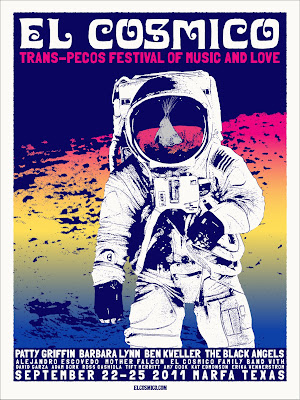
El Cosmico: Trans Pecos Festival of Music and Love
So it's probably a bit late for you to make a last second trip to Marfa for the music festival starting at El Cosmico tomorrow, but I had to post about it just because the poster is pretty cool. If you go, stick around for the Sunday charity breakfast benefiting Marfa Public Radio.


Monday, September 19, 2011
New Mt. Inadale release & release show - ((sounder)) 7"
Austin based Mt. Inadale Records is pumping out the releases these days like mixtapes. Just a few short months after the Monahans/Sad Accordions EP, the label is introducing a 7" blue vinyl from ((sounder)), the music project of Mike Aho.

Track listing:
1. We'll Turn the Coffins into Gardens
2. Don't Bring it to Life
The release will be on baby blue vinyl with a limited pressing of 500 copies. The songs were co-produced and mixed by Matt Wignall (Cold War Kids). Art by Travis Millard. Pre-orders are going out this week!
This Saturday, 9/24, Austin folks should catch a Mt. Inadale deluxe release party, featuring both ((sounder)) and Sad Accordions, for a double release show of both the ((sounder)) and Sad Accordions vinyl. It's also a rare opportunity to see Sad Accordions in Austin. The show is at Mohawk. Doors at 9, show at 10 PM. Cover $6/$8.

Track listing:
1. We'll Turn the Coffins into Gardens
2. Don't Bring it to Life
The release will be on baby blue vinyl with a limited pressing of 500 copies. The songs were co-produced and mixed by Matt Wignall (Cold War Kids). Art by Travis Millard. Pre-orders are going out this week!
This Saturday, 9/24, Austin folks should catch a Mt. Inadale deluxe release party, featuring both ((sounder)) and Sad Accordions, for a double release show of both the ((sounder)) and Sad Accordions vinyl. It's also a rare opportunity to see Sad Accordions in Austin. The show is at Mohawk. Doors at 9, show at 10 PM. Cover $6/$8.
Monday, September 12, 2011
Explosions in the Sky - Marfa, Sept. 15th (FREE SHOW!)
Austin instrumental rock band Explosions in the Sky will be making a long awaited return to West Texas this Thursday, Sept. 15th. The band will play a free show at Vizcaino Park in Marfa, with opening act Twin Sister. The band has been on tour recently supporting their latest record, the outstanding Take Care, Take Care, Take Care. EITS shows in west Texas are typically few and far between, so don't miss out on the opportunity to catch them this time. The show is free, and reports say "Doors at 7 PM" although, I'm not sure when the music actually starts.
Check out the recently released music video for "Be Comfortable, Creature," created by Paul Logan.
Check out the recently released music video for "Be Comfortable, Creature," created by Paul Logan.
Saturday, September 10, 2011
Music at the Permian Basin Fair
I really dropped the ball on promoting this, but the Permian Basin Fair this year (Sept. 9-17) is bringing in a couple of solid concerts this weekend and next. Admission is $10 for adults. Come out for some good music and stick around for a corn dog.
First of all, tonight, Sept. 10th, Turnpike Troubadours will be playing at 9:30 PM. These guys are really blowing up all over the radio, and recently sold out their first show at Gruene Hall. Plus, their albums Diamonds and Gasoline is a really solid listen.
First of all, tonight, Sept. 10th, Turnpike Troubadours will be playing at 9:30 PM. These guys are really blowing up all over the radio, and recently sold out their first show at Gruene Hall. Plus, their albums Diamonds and Gasoline is a really solid listen.
 |
| Photo credit Jon Voight |
Turnpike Troubadours - "Whole Damn Town"
Next week, on Sept. 17th, Reckless Kelly will be playing the fair at 7 PM. RK are long term stalwarts of the Americana/Red Dirt scene, and will be releasing their new record Good Luck and True Love on Sept. 13th.

Next week, on Sept. 17th, Reckless Kelly will be playing the fair at 7 PM. RK are long term stalwarts of the Americana/Red Dirt scene, and will be releasing their new record Good Luck and True Love on Sept. 13th.

Reckless Kelly - "Crazy Eddie's Last Hurrah"
Sunday, August 21, 2011
West Texas area music calendar - August-September
Odessa/Midland
8/26 - Eli Young Band - Dos Amigos
8/27 - Jamey Johnson - Dos Amigos
9/3 - Charlie Shafter - Lone Star Bar
9/10 - Turnpike Troubadours - Permian Basin Fair
9/15 - Granger Smith - Rockin' Rodeo
9/17 - Reckless Kelly - Permian Basin Fair
9/17 - Dierks Bentley - Rockhounds Baseball Park
9/22 - Styx - Chapparral Center
9/23-24 - Lone Star Music Fest - Midland, feat. Cody Canada & the Departed, Wade Bowen, Kevin Fowler, Chris Knight, No Justice, & more
9/29 - Kyle Park - Rockin' Rodeo
9/30 - Stoney Larue - Dos Amigos
10/15 - Josh Abbott - Dos Amigos
10/16 - Darius Rucker - Dos Amigos
10/27 - Bush, Chevelle, Filter - Dos Amigos
Alpine/Marfa/Big Bend
8/25 - Deke Dickerson & the Ecco-fonics - Railroad Blues
9/2 - JP & the Gilberts - Railroad Blues
9/4 - Joe King Carrasco & the Crowns - Railroad Blues
9/9 - James McMurtry - Padre's
9/15 - Explosions in the Sky, Twin Sister - Vizcaino Park in Marfa (FREE)
9/22-25 - Trans-Pecos Festival of Music & Love - El Cosmico; feat. Patty Griffin, Barbara Lynn, Erika Wennerstrom, Adam Bork, Amy Cook, Ben Kweller, Tift Merritt, the Black Angels
10/8 - Del Castillo - Railroad Blues
11/11-12 - 1st Annual Jimmy LaFave Songwriter Rendezvous - Lajitas Golf Resort & Spa; feat. Jimmy LaFave, Sam Baker, Slaid Cleaves, Kevin Welch, Malcolm Holcomb, Gretchen Peters, John Fulbright, Ray Bonneville, Will Kimbrough
Lubbock
8/25 - Jason Boland - Blue Light
8/27 - Reckless Kelly - Wild West
8/31 - Thrift Store Cowboys - Blue Light
9/16 - Rodney Parker & 50 Peso Reward - Blue Light
9/22 - John Evans Band - Blue Light
9/23 - Ray Wylie Hubbard - Blue Light
9/25 - Dirty River Boys - Blue Light
San Angelo
9/15 - Two Tons of Steel - The House of Fifi Dubois
9/22 - Turnpike Troubadours - Blaine's
9/24 - Los Lonely Boys - San Angelo Coliseum
Abilene
9/21 - Mindy Smith - Moody Coliseum
9/23 - Guy Clark - Paramount Theatre
8/26 - Eli Young Band - Dos Amigos
8/27 - Jamey Johnson - Dos Amigos
9/3 - Charlie Shafter - Lone Star Bar
9/10 - Turnpike Troubadours - Permian Basin Fair
9/15 - Granger Smith - Rockin' Rodeo
9/17 - Reckless Kelly - Permian Basin Fair
9/17 - Dierks Bentley - Rockhounds Baseball Park
9/22 - Styx - Chapparral Center
9/23-24 - Lone Star Music Fest - Midland, feat. Cody Canada & the Departed, Wade Bowen, Kevin Fowler, Chris Knight, No Justice, & more
9/29 - Kyle Park - Rockin' Rodeo
9/30 - Stoney Larue - Dos Amigos
10/15 - Josh Abbott - Dos Amigos
10/16 - Darius Rucker - Dos Amigos
10/27 - Bush, Chevelle, Filter - Dos Amigos
Alpine/Marfa/Big Bend
8/25 - Deke Dickerson & the Ecco-fonics - Railroad Blues
9/2 - JP & the Gilberts - Railroad Blues
9/4 - Joe King Carrasco & the Crowns - Railroad Blues
9/9 - James McMurtry - Padre's
9/15 - Explosions in the Sky, Twin Sister - Vizcaino Park in Marfa (FREE)
9/22-25 - Trans-Pecos Festival of Music & Love - El Cosmico; feat. Patty Griffin, Barbara Lynn, Erika Wennerstrom, Adam Bork, Amy Cook, Ben Kweller, Tift Merritt, the Black Angels
10/8 - Del Castillo - Railroad Blues
11/11-12 - 1st Annual Jimmy LaFave Songwriter Rendezvous - Lajitas Golf Resort & Spa; feat. Jimmy LaFave, Sam Baker, Slaid Cleaves, Kevin Welch, Malcolm Holcomb, Gretchen Peters, John Fulbright, Ray Bonneville, Will Kimbrough
Lubbock
8/25 - Jason Boland - Blue Light
8/27 - Reckless Kelly - Wild West
8/31 - Thrift Store Cowboys - Blue Light
9/16 - Rodney Parker & 50 Peso Reward - Blue Light
9/22 - John Evans Band - Blue Light
9/23 - Ray Wylie Hubbard - Blue Light
9/25 - Dirty River Boys - Blue Light
San Angelo
9/15 - Two Tons of Steel - The House of Fifi Dubois
9/22 - Turnpike Troubadours - Blaine's
9/24 - Los Lonely Boys - San Angelo Coliseum
Abilene
9/21 - Mindy Smith - Moody Coliseum
9/23 - Guy Clark - Paramount Theatre
Tuesday, August 2, 2011
Richard Buckner - Our Blood

Today marks the release of Richard Buckner's Our Blood, his first release in 5 years. Buckner has received a great deal of praise throughout his career, and the hiatus has no doubt been tough for his loyal fanbase.
Richard Buckner - "Traitor"
The beauty of having a new release from Buckner is that we have the chance to hear from him in interviews. As an artist who rarely, if ever, talks while performing, it is fortunate that he has been quite generous with the interviews he has done leading up to this record. You can find a number of them out there, although this one from Magnet Magazine is one of the better ones I have seen. In it, you can find a brief summation of the reasons behind his 5 year gap between albums.
To put in perspective how long ago Meadow was released, the vinyl resurgence among indie labels was not yet very far along and it was available only on CD and mp3. Therefore, Our Blood is, to my knowledge, his first full-length album available on vinyl. It was worth the wait.
Wednesday, July 27, 2011
Rodney Parker - Live in the Living Room

(photo credit Adam Neese)
Denton-based Rodney Parker & 50 Peso Reward have been gaining steam for some time now, touring the Texas circuit for a number of years, and as of late, taking over the airwaves as well. Parker's single "The Apology" is the latest to find its way into the Texas Music Chart, and follows on the heels of "Guitars," which has seen a tremendous amount of airplay in the past year.
Reports indicate that the follow-up to Parker's 2010 EP The Apology, Part 1, will see a release just before the end of this year, and Part 2 will reportedly be a full-length record. In the meantime, however, Parker is releasing a stripped down live record, Live in the Living Room. Spanning 13 tracks, this album was recorded...you guessed it...in the band's living room. Using no amplification, they played and recorded these songs in front of a small audience and, showcasing their strong musicianship as a touring band, the band chose to release the record as is, with no overdubs or alterations.

This record should provide an interesting contrast to the band's typically supercharged electric show and hopefully will tide fans over until the next installment of The Apology later this year. 50 Peso die-hards will also be pleased to find that material for this album stretches all the way back to the band's 2005 debut, Blow the Soot Out, and follows with select tracks from subsequent releases. In addition, the album features two unreleased songs, "Skin and Bones" and "Where the Bright Lights Glow Me." Parker & the Pesos continue to prove themselves as one of the top emerging bands in the regional Americana scene, and this release should do nothing but help their profile as they continue the drive toward greater notoriety.
Rodney Parker & 50 Peso Reward - "Skin and Bones"
Track Listing for Live in the Living Room (Release date 8/2):
1. Firefight
2. Highway Blues
3. Guitars
4. Ghost
5. Where the Bright Lights Glow Me
6. Bring Me My Gun
7. The Ship
8. Atlantic City
9. The Apology
10. I'm Never Getting Married
11. Tell Me What It Is
12. Skin and Bones
13. 10 lb. Test
Pre-Order the record at Lonestarmusic.com or iTunes (or basically any other major retailer, for that matter).
Subscribe to:
Posts (Atom)


 Posts
Posts

